Wedding security: when it adds value, and what good coverage looks like
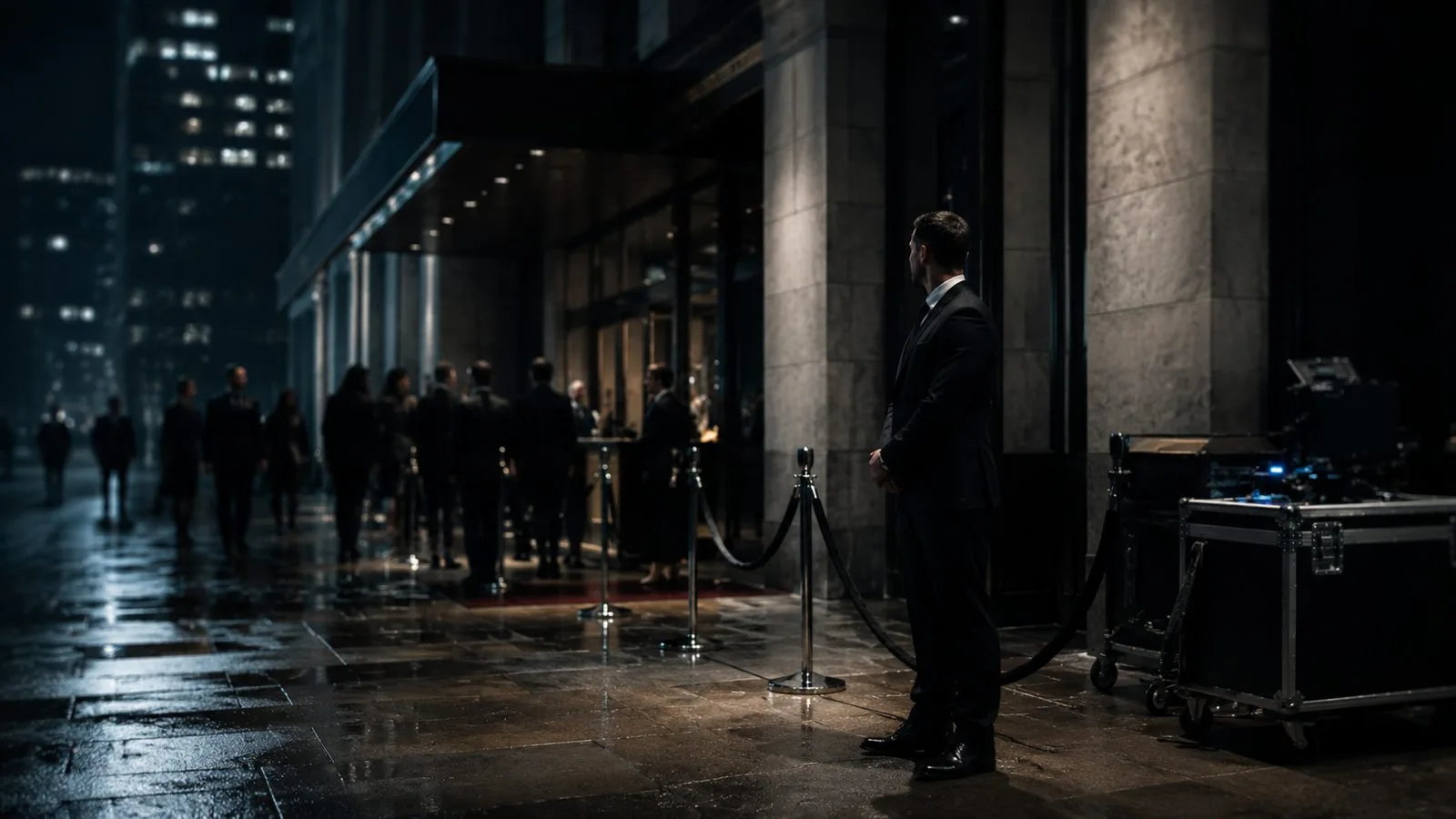
A wedding day runs on a tight plan, and most of the people in it already have a job: the venue staff, the planner, the ushers, and the family. Professional security adds value when something about your day creates a job none of them should be doing, such as watching a card box for five hours, recognizing one person at the door, or moving gifts across town at midnight. This guide helps couples, families, and planners see where security fits, decide how much coverage the day calls for, and know what good wedding security looks like.
A simple test: is there a job nobody owns?
Instead of asking whether a wedding is “safe,” ask a narrower question: is there a specific task on the day that nobody is assigned to? Watching a card box with cash in it for five hours is a task. Recognizing one person at the door and turning them away politely is a task. Moving gifts from a reception to a hotel at midnight is a task. If you can name the task and no one on the venue staff, the planning team, or the family can own it without missing their own part of the day, that is where security fits. Naming those tasks early is how coverage gets sized to your day rather than to a package.
Start with what is already covered
Good coverage fills the gaps the venue leaves rather than duplicating its staff, so start by finding out what the venue already provides. Ask the venue’s event manager:
- Does the venue have its own security or door staff on duty during your event, and what do they cover: the building, or your event specifically?
- Which entrances will be open, and who controls them?
- Is there a room that locks, for gifts and cards?
- Does the venue allow outside security, require it, or have rules about it, including whether armed staff are permitted?
Hotels and full-service venues often have more in place than couples realize. A private home, a tented property, or a rented loft usually has none of it, and that difference matters more than the guest count.
When wedding security adds value
- The venue or hotel requires it. Some contracts require licensed security for events of a certain size or type. Then the question is only how to meet the requirement well, so ask for it in writing: how many staff, for which hours, and any licensing or insurance paperwork the venue wants.
- High-profile guests or family. A public figure, an executive, or a family that draws attention may need a planned way in and out, and in some cases a person assigned to stay with them through the day.
- A public-facing couple. If the date and venue have been shared publicly or followers know where you will be, controlling the entrance against the guest list becomes a real job.
- Someone who should not attend. A strained family relationship or a person who may arrive uninvited is one of the most common and most reasonable reasons to call. The family should not have to be the ones at the door.
- Significant gifts, cards with cash or checks, or valuables. A card box, heirloom jewelry, or a gift table in a busy room needs someone watching it who is not also hosting.
- Several venues and the moves between them. A ceremony, a reception, and an after-party in different places create gaps: guests, the couple, and valuables in transit, and a second venue filling before anyone from the family has arrived.
- A large guest count at a venue without house security. A backyard, estate, or rented space with open gates, a long driveway, or several doors has no one managing access unless you arrange it.
- A hotel after-party or gift suite. Late-night gatherings in a suite, and gifts stored there overnight, fall outside what the reception venue covers.
Match the coverage to the situation
Good coverage is sized to the job, not sold as a package. These are typical starting points, not a price list; the venue layout, the entrances in use, the guest count, and the timeline settle the final plan.
| Situation | What coverage typically looks like | When |
|---|---|---|
| Venue or hotel requirement | What the contract specifies. Confirm the number of staff, hours, and paperwork with the venue before booking. | As the venue sets |
| One person who should not attend | One discreet staff member at the main entrance with a photo, clear instructions, and a named family contact | Guest arrival through the ceremony, longer if a later appearance is likely |
| Card box, gifts, or valuables | One staff member near the gift table, then moving cards and gifts to a room or vehicle you choose | Cocktail hour through the end of the night |
| Large guest count, no house security | A small team: main entry, a side entrance or perimeter, and a lead on site | Setup through last guest out |
| Ceremony and reception at different venues | A small team with staff moving ahead to the next venue, someone responsible for gifts in transit, and a lead working with the planner | The full day, including transitions |
| High-profile guest or public-facing couple | Guest-list check at entry, a small team across venues, and close protection for the specific person where needed; transportation may be added | The full day, sometimes the rehearsal dinner and departures |
| Hotel after-party or gift suite | One staff member at the suite door; overnight coverage only if gifts are stored there | Late night, into the morning if needed |
Unarmed staff are typical for private celebrations. Armed coverage should answer a specific, assessed risk and must fit the venue’s rules; our article on armed vs. unarmed security explains how that decision is made. For larger galas and corporate functions, see event security.
What good coverage looks like on the day
Good wedding security should not change how the day feels. Three things make the difference:
- Attire. Agreed with you in advance. Suits or formal wear that match the dress code for most weddings; something less formal for a daytime or outdoor celebration. No uniforms or visible equipment unless you ask for a visible presence.
- Positioning. Near entrances, at the edges of the room, and within sight of the gift table. Not in the aisle, not on the dance floor, and not in the photographer’s key shots. A quick word with the photographer about where they will be working helps.
- Briefing the planner. The planner runs the day, and security works inside that plan. Share the run of show, vendor load-in times, and key contacts with the security lead, name one family member who knows the guests by sight, and agree in advance on the exact wording staff will use if someone needs to be turned away.
Questions to ask a provider
- Are the people working our wedding your own employees, and who will be the lead on site?
- Will you or your lead talk with our planner before the day, and walk the venue or review the floor plan and house rules?
- How many staff are you proposing, for which hours and locations, and why that number?
- What will staff wear, and where will they stand during the ceremony and reception?
- Armed or unarmed, and what is the reasoning?
- How will staff handle someone who is not on the list, and when would they call the police?
- Can you provide the insurance or other paperwork our venue asks for?
- What happens to gifts and cards at the end of the night?
- Who is our single point of contact before the day and on it?
An experienced provider answers each of these readily, and TB Defense plans every wedding around them. Planners can use the wedding security coordination checklist to collect the venue, timeline, and contact details a provider will ask for.
Example (hypothetical)
This example is illustrative. It does not describe a real client or event.
A couple plans a ceremony at a house of worship and a reception for about 180 guests at a rented loft with no event staff of its own. The bride’s family has asked that one relative not attend, and the couple expects a card box with checks and cash. The hotel after-party is informal and small.
After a scoping call and a look at the loft’s floor plan, the plan is focused: one staff member at the ceremony entrance through the arrival window, with a photo and a named family contact, who then moves ahead to the loft before guests arrive; a second staff member at the loft’s entrance and gift table from cocktail hour to the last guest out; and, at the end of the night, the card box handed to the maid of honor in the hotel lobby. Each post covers a specific job the day created, and no one in the family has to step away from the celebration to handle one.
Plan your wedding security with TB Defense
TB Defense is based in Chicago and led by a Chicago Police officer with 20 years of service. We plan and staff wedding security locally, nationally, and internationally, working inside your planner’s run of show and your venue’s rules. Share the date, the venues, and what prompted the question, and we will shape coverage around your day. See how TB Defense wedding security works with planners and venues, or Get protected.
Common questions
When does a wedding need security?
When something about the day creates a job nobody else should be doing: a venue requirement, a high-profile guest, a family situation, significant gifts or cash, several venues, or a large guest count at a venue without house security. Professional staff take those jobs off the family and the planner so everyone else can enjoy the day.
How much security does a wedding need?
Match the coverage to the job. A single concern, such as one person who should not attend or a card box with cash, is often handled by one discreet staff member for a few hours. Several venues, a large guest count at a venue without house security, or a high-profile family usually call for a small team with a lead on site. The right number comes from the venue layout, the entrances in use, the guest count, and the timeline.
Will guests notice wedding security?
Most should not. Staff dress to the event’s dress code as agreed in advance, stay near entrances and at the edges of the room, and keep out of the aisle and the photographer’s shots. If you want a more visible presence at the door, that is a choice you make with the provider.
Can security keep an uninvited relative out?
On your instructions, staff can politely decline entry to the private event on the host’s behalf where the venue allows it, and bring in the family member or planner you name. Private security staff are not police and do not enforce court orders. If a legal matter comes up, such as a possible violation of an order of protection, they call the police.