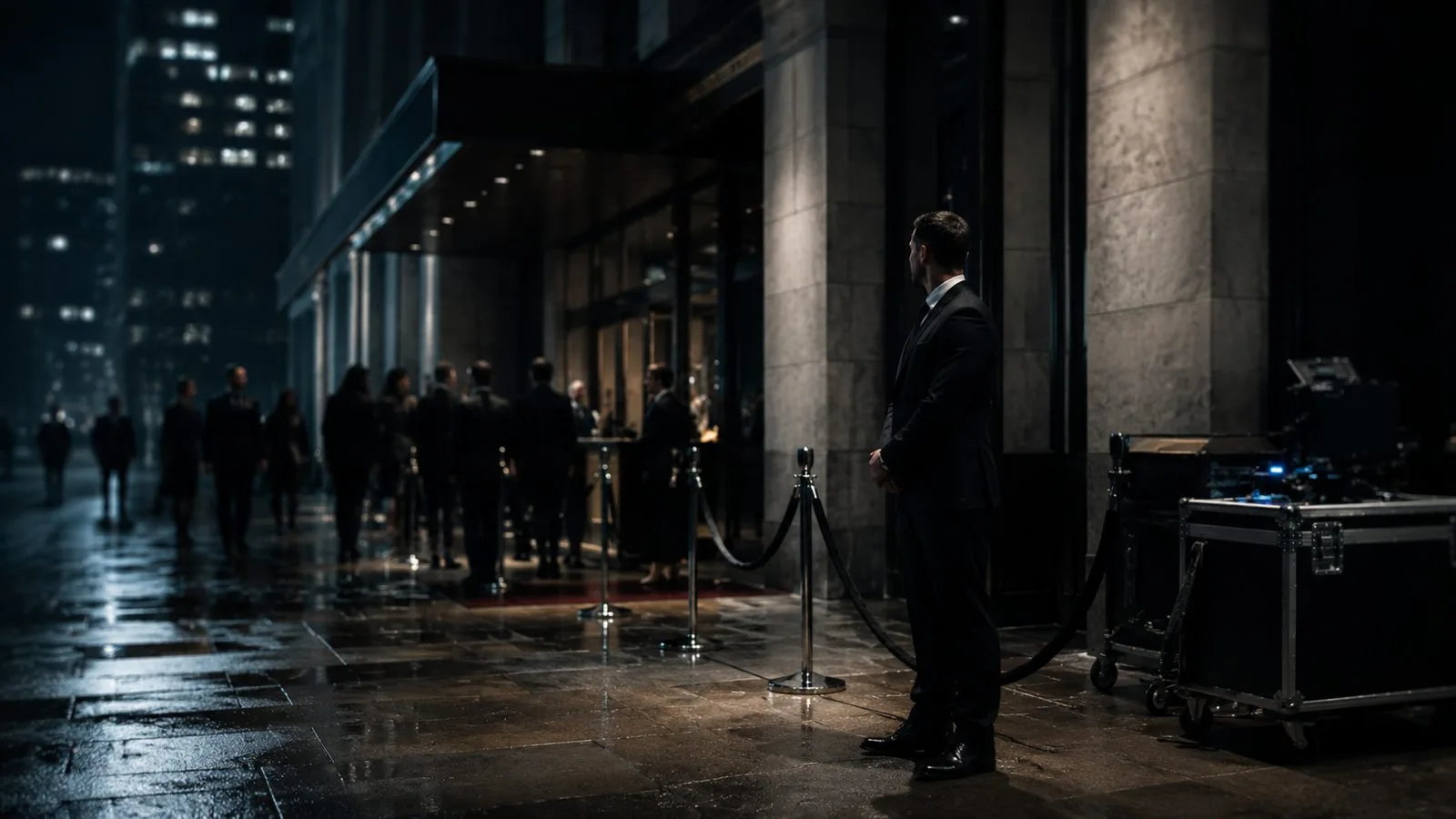
House of Worship Security in Chicago
A congregation has to stay open to be a congregation. Security for synagogues, churches, mosques, and temples, built so the building stays what it is.
House of worship security protects synagogues, churches, mosques, and temples without changing what they are: open, welcoming buildings at published times and addresses. TB Defense, based in Chicago, provides armed and unarmed officers, vulnerability assessments, and high-holiday surge coverage for congregations across Chicago, the North Shore, and beyond.
What house of worship security includes
- A site vulnerability assessment written for the building you actually have
- Armed or unarmed officers, sized to the assessment
- Greeter-integrated posts, so the first face a visitor meets is welcoming and watching
- Access control at secondary doors, which are often less watched than the main entrance
- Arrival and dismissal coverage, two periods of elevated exposure
- High holiday and festival surge coverage, planned months ahead
- A written response protocol clergy, staff, and volunteers have actually read
- Documentation suitable for a Nonprofit Security Grant Program application
Security that does not change what the building is
Everyone is welcome, most of the year, at published times, at a published address. Security that ignores this tends to fail, and security that overrides it changes what the building is. A bank can lock its doors. A congregation cannot, and would not want to.
The most common mistake is visible hardening that makes a congregation feel like a target. Members may bring fewer guests, attendance can suffer, and the security can succeed technically while failing at what matters most. Coverage that works is usually quieter than people expect: an officer positioned where the approach is visible rather than where the officer is, and attention paid to the doors that are easy to overlook.
The people who come through the door on a Saturday morning include members, guests, visitors nobody has met, and occasionally someone who is struggling and has nowhere else to go. Telling them apart is not a technology problem. It is a judgment problem, and judgment is what trained people bring.
How should a congregation plan high-holiday security?
Plan it as its own operation, and start months ahead. Risk is not evenly distributed across the year. Attendance can rise sharply, the building fills with people the regular staff do not recognize, the schedule is published in advance, and the date is known to anyone who wants to know it.
Surge coverage is a different plan, not more of the same one. It means additional posts, a traffic and parking plan, coordination with local police, a defined command point, and a briefing everyone has been through before the first person arrives. Booking months ahead gives a congregation the most options. Earlier requests are easier to staff well.
Life-cycle events bring their own guests and schedules. For a wedding or a bar or bat mitzvah hosted at the building or elsewhere, see wedding and private celebration security; for other large gatherings, see event security.
What is a house of worship vulnerability assessment?
An assessment is a written examination of one physical site: how someone would approach it, where they would get in, what they would reach, how long it would take anyone to notice, and what the consequence would be. It produces a findings document with prioritized recommendations, and it gives a congregation a sound basis for its other security decisions.
It is also a federal grant requirement. Organizations applying to the Nonprofit Security Grant Program must submit a vulnerability assessment for each site, addressing the threat, vulnerability, and consequence unique to that address. A congregation with a sanctuary, a school, and a satellite campus needs three separate assessments, not one.
Using NSGP funding for contracted security
The Nonprofit Security Grant Program is federal funding administered through the states for nonprofits at high risk of terrorist or other extremist attack. Under FEMA’s FY 2026 Notice of Funding Opportunity, the program carried 300 million dollars, and an organization could request up to 200,000 dollars per site, for up to three sites per funding stream, with a combined maximum of 600,000 dollars per state.
Most congregations know it covers cameras, locks, and barriers. Fewer know that contracted security personnel are an allowable cost. The FY 2026 notice allows a subrecipient to use up to its full award for contracted security personnel, under FEMA’s guidance for that cost. Grant funds cover the staffing hours; they do not cover equipment for the contracted firm. Personnel rules have changed between cycles, so check the current notice before budgeting.
Two things are worth understanding before applying. Applications are competitive and quality decides them, so the ones that succeed connect a specific assessed threat to a specific requested measure rather than asking generally. And grant funding ends, so a congregation should scope coverage it can eventually sustain without NSGP money rather than the largest number the grant allows.
In Illinois the program is administered by the Illinois Emergency Management Agency and Office of Homeland Security (IEMA-OHS). Organizations in Cook County apply through the Urban Area Security Initiative track, and organizations elsewhere in the state apply through the statewide track. The state deadline falls earlier than the federal one, so check IEMA-OHS for the current date.
TB Defense produces the vulnerability assessment your application requires and delivers the contracted coverage it funds, with armed or unarmed security officers on the posts the assessment identifies. Grant writing and award decisions stay with your organization and the state.
Working with volunteer safety teams
Many congregations already have a volunteer safety committee, and some have members who are current or former law enforcement. That is an asset, not a complication. The failure mode is a volunteer team with no defined role, no training standard, and no clarity about what happens when something real begins.
The work is to give them a defined function alongside professional coverage: who watches which door, who calls, who moves people, and who does nothing and stays with the congregation. Most volunteers are relieved to be told exactly what their job is.
TB Defense is led by career Chicago Police investigators whose work has included threat assessment and protective intelligence; meet our leadership and see who we protect.
Common questions
Can NSGP grant funds pay for contracted security officers?
Yes. Contracted security personnel are an allowable expense under the Nonprofit Security Grant Program. The FY 2026 notice allows a subrecipient to use up to its full award for contracted security personnel. Grant funds cannot be used to buy equipment for the contracted security firm. Confirm current rules with FEMA and IEMA-OHS, as they change between cycles.
Do we need a separate vulnerability assessment for each building?
Yes. Where an organization applies for projects at multiple sites, each physical address requires its own assessment of the vulnerability and risk unique to that location, and each Investment Justification must address a risk specific to that site.
When do NSGP applications open in Illinois?
FEMA typically publishes the Notice of Funding Opportunity in early summer, and Illinois sets its own earlier deadline through IEMA-OHS. Organizations in Cook County apply through the Urban Area Security Initiative track, and organizations elsewhere in the state apply through the statewide track. Begin assessment work several months ahead of the state deadline.
Should security at a house of worship be armed?
We provide both. The choice follows the assessed threat, the building, the community, and what the congregation wants day to day, and it comes out of an assessment rather than a preference and can be revisited.
Can you cover only the high holidays?
Yes. Surge-only coverage is common and is a normal way for a congregation to start. Earlier requests are easier to staff well, because demand rises in the weeks before major holidays.
Protect what matters most.
Tell us what you are protecting and what concerns you. We will give you a direct assessment and a plan to protect it. We treat consultations as confidential.
Tell us what needs protecting.
- Phone855-823-3336
- Emailadmin@tbdefense.com
- Office1021 W Adams St, Suite 200-37, Chicago, IL 60607
- HoursIntake line answered 24/7. Office by appointment.