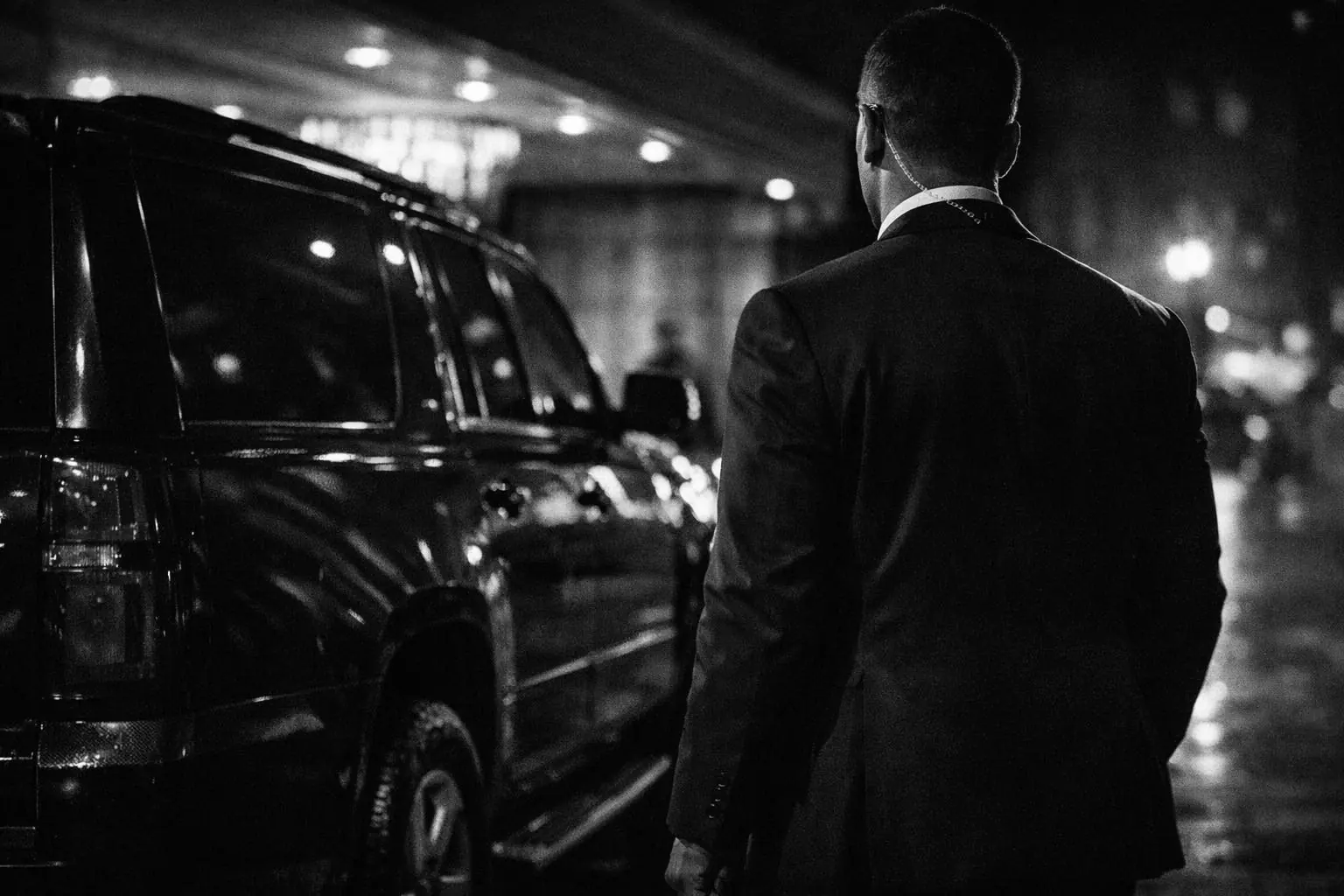
Film & TV Production Security in Chicago
Security that keeps pace with the call sheet: set, basecamp, overnight equipment, and talent coverage, in Chicago and on location nationally and internationally.
Film and TV production security protects the set, basecamp, overnight equipment, cast, and crew of film, television, commercial, and documentary productions, built around the call sheet rather than a fixed shift. TB Defense provides armed and unarmed production security from Chicago, on location locally, nationally, and internationally.
What production security covers
- Set and location perimeter coverage during the shooting day
- Basecamp, holding areas, crew parking, and equipment staging
- Overnight watch on trucks, trailers, gear, and dressed sets
- Management of onlookers on public locations, courteously and within the law
- Protection for talent or high-profile crew, on set and in transit
- Low-profile support for small documentary crews
- Coordination with the production office, location managers, and any police assigned through the permit
Who hires production security?
Line producers, production managers, location managers, and documentary producers who need a security vendor that works from the call sheet, answers to the production, and adjusts when the day changes. Our clients include film and television talent and touring artists; see selected clients and our leadership team.
When does a production need security?
Filming on public streets or in residential neighborhoods, multi-day shoots with gear left on location, basecamps in open lots, talent whose presence draws a crowd, and documentary interviews in places the crew does not know well. Bring security in while the schedule is being built, so coverage is planned around every shooting day.
Built around the call sheet
Security on a production answers to the production. Before the first shift, we agree on a single contact on each side, usually the production manager or the location manager, and work from the current call sheet, the location list, and the basecamp plan.
Call times move, days run long, and company moves happen mid-shift. Post times and staffing follow those changes where they can, and a supervisor or team lead keeps the posts current as the day develops. When a change affects coverage or cost, we say so before the shift, not on the invoice.
Set, location, and basecamp coverage
On a shooting day, coverage usually splits across the set perimeter, the basecamp and holding areas, crew parking, and equipment staging. Posts are placed to keep unauthorized people away from cables, carts, and working areas, to watch trailers and cast holding while the crew is on set, and to keep walkways clear for the public as the permit requires.
Where the shoot involves a longer site commitment, such as a stage, a production office, or a location held for weeks, a fixed post can be set up through our security officer service and run alongside the shooting-day coverage.
Onlookers and the public
Filming on a public location draws attention. Our officers can ask onlookers to step back from working areas, keep sightlines and walkways clear, and handle curious neighbors courteously. Police powers stay with the police, so officers do not close streets, clear public sidewalks, or detain anyone for watching or filming the shoot.
Local rules set the limits. In Chicago, for example, the Chicago Film Office’s permit guidance and code of conduct says that any temporary halt of pedestrian traffic must be courteous and reasonably brief, that public access to businesses, buildings, and residences must be maintained, and that vehicular traffic control can only be carried out by Chicago Police officers. Wherever the production is filming, our posts are planned inside the local limits.
Active production vs. overnight equipment coverage
Active-production coverage runs while the crew is working. It is about people: the perimeter, the public, holding areas, and talent. It follows the call sheet and moves when the company moves.
Overnight equipment coverage starts when the crew wraps and ends at the next call. It is about property: grip and electric trucks, camera and sound gear, trailers, generators, picture vehicles, and sets left dressed. It is usually a smaller, fixed post, with checks at agreed intervals until the crew returns.
The two are scoped and priced separately because they are different jobs. Before an overnight post begins, we confirm what is being left, exactly where it is parked, who holds the keys, who to call during the night, and when the first crew arrives.
Talent, crew, and transportation
When talent or a high-profile crew member needs dedicated coverage, a protective agent can stay with that person between holding, set, and base, and during public moments on location. That work draws on the same planning as our executive protection service.
Premieres and wrap events can be covered through event security. Moves between hotel, set, and appearances can be handled through secure transportation, coordinated with the production’s own transportation department and the day’s schedule rather than run separately from it.
Documentary crews
Documentary work has a different shape. Crews are small, often a director, a camera operator, and a sound recordist. Subjects can be sensitive, and interviews may take place in neighborhoods, homes, or businesses the crew has never visited. A large, visible security presence can change the interview and draw the attention the crew is trying to avoid.
Coverage is usually one agent, sometimes two, in a low-profile posture and plain clothes. Before the shoot, we look at the location: how the crew gets in and out, where the vehicle is staged, who controls the property, what the area is like at the time of day planned, and what the fallback is if the interview runs long or the situation changes. On the day, the agent watches the surroundings so the crew can concentrate on the work.
The boundaries are clear. Journalistic and editorial decisions, including who is interviewed, what is filmed, what is asked, and what is published, stay with the production. We do not vet subjects, handle sources or footage, or take part in the interview. If we believe conditions have become unsafe, we say so plainly and recommend how to move; the producer decides what that means for the shoot.
Permits, police, and the local film office
Filming permits are issued locally, usually by a city or regional film office, and the rules vary from place to place. In Chicago, permits are handled by the Chicago Film Office, part of the Department of Cultural Affairs and Special Events. According to the Film Office’s own guidance, a permit is required to occupy the public way with equipment or vehicles or to block pedestrian or vehicular traffic, and filming on private property must be approved by the property owner or management.
The Film Office’s city services page states that police supervision is necessary for any traffic control on city streets and for the use of special effects or firearms. Those officers are requested through the Film Office as part of the permit process, not through a private security firm.
Private security does not replace any police or permit requirement. We work alongside whatever the permit calls for: we coordinate with assigned officers on location, keep our posts consistent with the permit, and leave traffic control and law enforcement to the police. Permit questions belong with the local film office and the production’s location team.
What coverage looks like
Coverage is built around the shoot: posts for set, basecamp, holding, and overnight equipment as the production needs them, with a point of contact on site who works with your production or location manager.
Clear roles on set
The production owns permits, city services, location agreements, the call sheet, and editorial decisions, and the location owner sets the house rules. Police assigned through the permit handle traffic control and law enforcement, and medical emergencies go to 911, EMS, and any set medic. TB Defense runs the security plan, the posts, supervision of our officers, and coordination with the production and any assigned officers, with armed or unarmed posts set during scoping.
How an engagement works
Every engagement starts with a conversation about the shoot and what you need. From there we scope the coverage around your schedule and locations, staff it, and stay in contact with the production throughout.
What changes the cost
Every proposal is priced to the production. The number moves on the number of officers and posts, the length of each shift and the total shooting days, whether overnight equipment coverage is needed and for how many nights, armed or unarmed posts, the number of locations and company moves, advance and location review time, dedicated talent protection or transportation, short notice, and overtime when days run past the plan.
When comparing proposals, check what each one assumes about shift length and overtime, whether overnight coverage is included, and how many officers are actually on post at once.
What to have ready for the first conversation
- Shooting dates, expected hours, and any night work
- Locations or neighborhoods, and which are public or private property
- The current schedule or call sheet, even in draft
- Basecamp, crew parking, and equipment staging plans
- What will be left on location overnight, and for how many nights
- Talent or crew who may need dedicated coverage or transportation
- Where the filming permit stands and any police services requested
- Contacts for the production manager and location manager
- Any documentation your production or location requires from vendors; ask us about it
Our production security scope checklist sets these out in more detail, with active-production and overnight needs listed separately, and what a producer should send a security company explains why each detail shapes the proposal.
Common questions
Can you cover equipment overnight?
Yes. Overnight equipment coverage is scoped separately from coverage during the shooting day. We talk through what is staying on location, where the trucks and trailers will be parked, who holds keys, and when the crew returns.
What happens when the schedule changes?
Schedules change on almost every production, so the plan names one contact on each side. Changes to call times, wrap, locations, or company moves go through those contacts, and we adjust post times and staffing where we can. If a change affects coverage or cost, we say so before the shift, not after.
Do you replace police required by a permit?
No. Private security does not replace any police or permit requirement. In Chicago, for example, the Chicago Film Office states that vehicular traffic control can only be implemented by Chicago Police officers, and that police supervision is necessary for traffic control on city streets and for the use of special effects or firearms. Those services are requested through the local film office as part of the production's permit process, and our team coordinates with them on location.
Can you work with a small documentary crew?
Yes. Documentary coverage is often a single agent working in a low-profile posture, with an advance look at the location before the crew arrives. Editorial and journalistic decisions, including who is interviewed and what is filmed, stay with the production. Our role is the safety of the crew and the plan for getting in and out.
What do you need to prepare a proposal?
Shooting dates and hours, the locations or neighborhoods involved, a draft schedule or call sheet if one exists, the basecamp and parking plan, what will be left on location overnight, any talent who needs dedicated coverage, and your permit status. Ask us about any documentation your production or location requires from vendors.
Is production security armed or unarmed?
Both are available, and the choice is made during scoping. Most set, basecamp, and overnight posts are unarmed, and armed coverage is provided where the assessment supports it and the production and location allow it.
Tell us about the shoot.
Send the dates, the locations, and what needs covering, and we will scope coverage sized to the production. We treat consultations as confidential.
Tell us what needs protecting.
- Phone855-823-3336
- Emailadmin@tbdefense.com
- Office1021 W Adams St, Suite 200-37, Chicago, IL 60607
- HoursIntake line answered 24/7. Office by appointment.