How a security advance actually works, and why the day before matters more than the day of
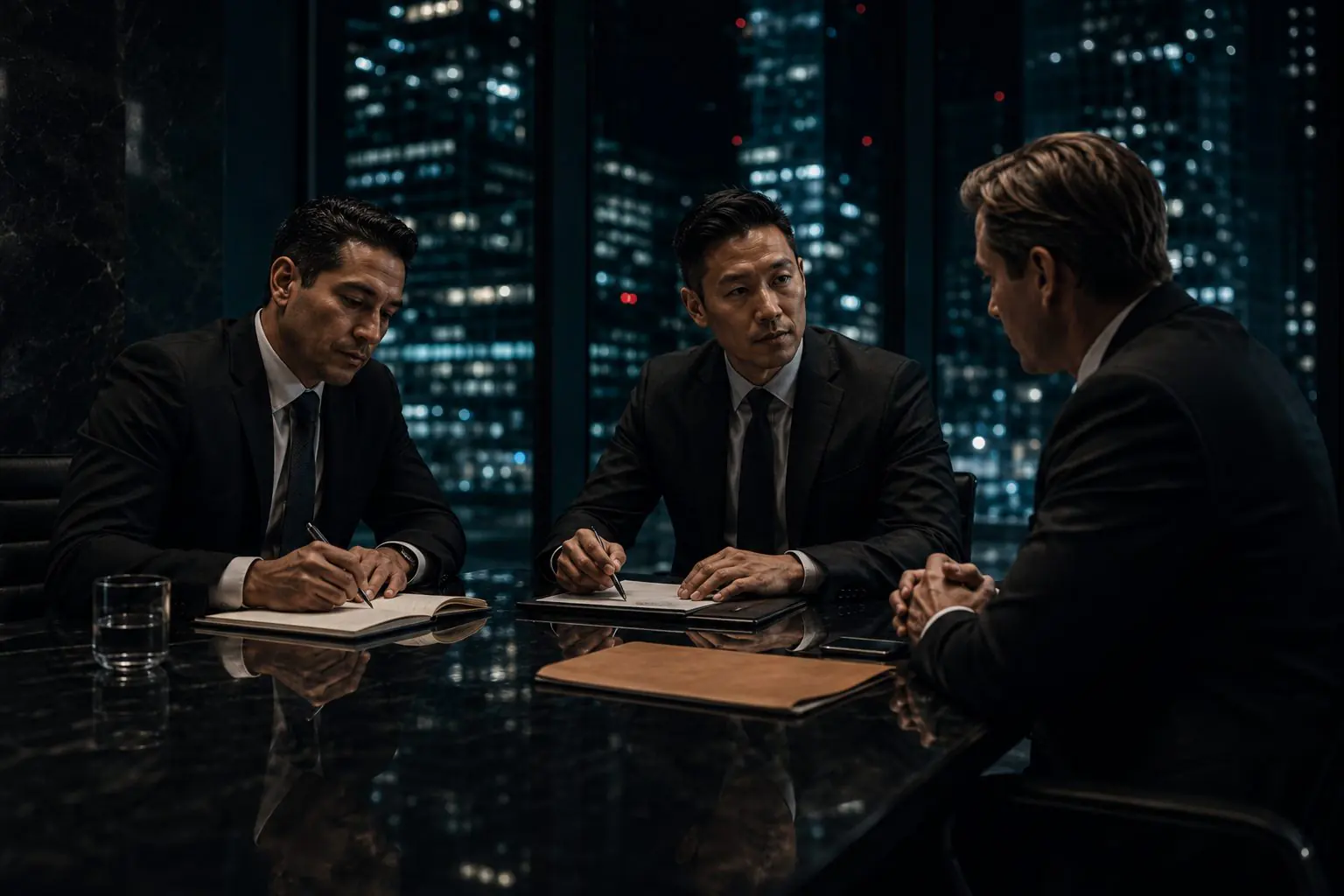
A security advance is the work done before a principal arrives: walking the venue, mapping the routes, identifying the failure points, and settling who is responsible for what. It is the least visible part of protective work and the part that determines whether the day goes well. By the time the principal is in the car, every decision that matters has already been made.
People who have not done this work tend to picture the advance as a walkthrough. Someone looks at the room, nods, and leaves. A real advance is a sequence, and it produces a document.
Start with the schedule, not the building
Before anyone walks anywhere, you need the actual schedule, including the parts that are not on the printed agenda. Arrival time. Who is meeting the principal at the vehicle. Whether there is a photo line, and where. Whether the principal is doing press, and when. Departure time and whether it is hard or soft.
Schedules slip, and the ones that slip most reliably are the ones with a photo line. Build the plan around the sequence rather than the clock, because the sequence holds even when the times do not.
Walk the arrival first, and walk it backward
The arrival is where a principal is most exposed: outside the vehicle, in a fixed location, at a time that was published. Stand where the car will stop. Look at what has a view of that spot. Count the steps from the door of the vehicle to the door of the building.
Then walk it backward from the entrance to the street, because that is the direction you will move if something goes wrong.
Most venues offer two arrival options: the front entrance and the loading dock or garage. The front is better for a principal who wants to be seen and worse for almost everything else. The dock is unglamorous, controllable, and usually the right answer. Make it a decision, not a default.
Map the interior as a sequence of transitions
Inside, the risk concentrates in the transitions: vehicle to lobby, lobby to elevator, elevator to holding room, holding room to stage. Each one is a moment when the principal is moving through a space that other people also occupy.
For each transition, you want three things. A primary path. An alternate. And a decision about who controls the space during the move. An elevator that anyone can call is not a controlled path. A stairwell nobody has checked is not an egress.
The holding room gets its own attention. Where is it, who has a key, does it lock from the inside, and is there a second way out. If the answer to the last one is no, you note it and you plan around it.
Plan the route with alternates, then drive them
A route plan with one route is not a plan. You want a primary, at least one alternate, and a rough sense of where you would go if both were blocked.
In Chicago this is not theoretical. Construction closes lanes with little notice, a Loop event closes streets for a weekend, and a Lower Wacker backup can add twenty minutes to a two-mile trip. Drive the routes at the time of day the movement will happen, not at ten in the morning when the street is empty. Traffic at 5:45 on a Thursday is a different city than traffic at 10:15 on a Tuesday.
Note the hospitals along each route. You will almost certainly never need one. It takes four minutes to look up.
Settle the coordination before the day
This is the step that gets skipped, and it is the one that causes the most trouble on site.
Make contact with venue security and building management in advance. Confirm who controls the perimeter, who controls the holding room, and who has keys to what. If an official protective detail will be present, make contact with its lead and confirm the division of responsibility explicitly. Where notification to local law enforcement is appropriate, make it through proper channels, and understand that notification is a courtesy and a coordination step, not a request for assistance.
Then write it down. A one-page document that says who owns which space, who the single point of contact is, and what the radio or phone plan is. Verbal agreements in a hallway at 4:00 do not survive contact with a real problem at 7:30.
Brief the team on the plan, and on the restraint
The last step of the advance is the briefing, and half of it is about what not to do. Agents need to know the routes, the holding room, the signal to move, and the point of contact. They also need to know that at a public event, with press in the room, restraint is the professional default. De-escalate. Move the principal. Do not become the story.
Why the document matters
An advance produces a written plan, and that plan is worth having for reasons beyond the event. It is what you hand the client. It is what you compare against the after-action notes. And when the same principal comes back to the same venue in eight months, it is the thing that makes the second advance take two hours instead of a day.
Protective work improves by paying attention over time. The advance is where that attention gets recorded.
TB Defense conducts venue advances and provides protective coverage for officials and political events locally, nationally, and internationally. Consultations are confidential. Get protected.